

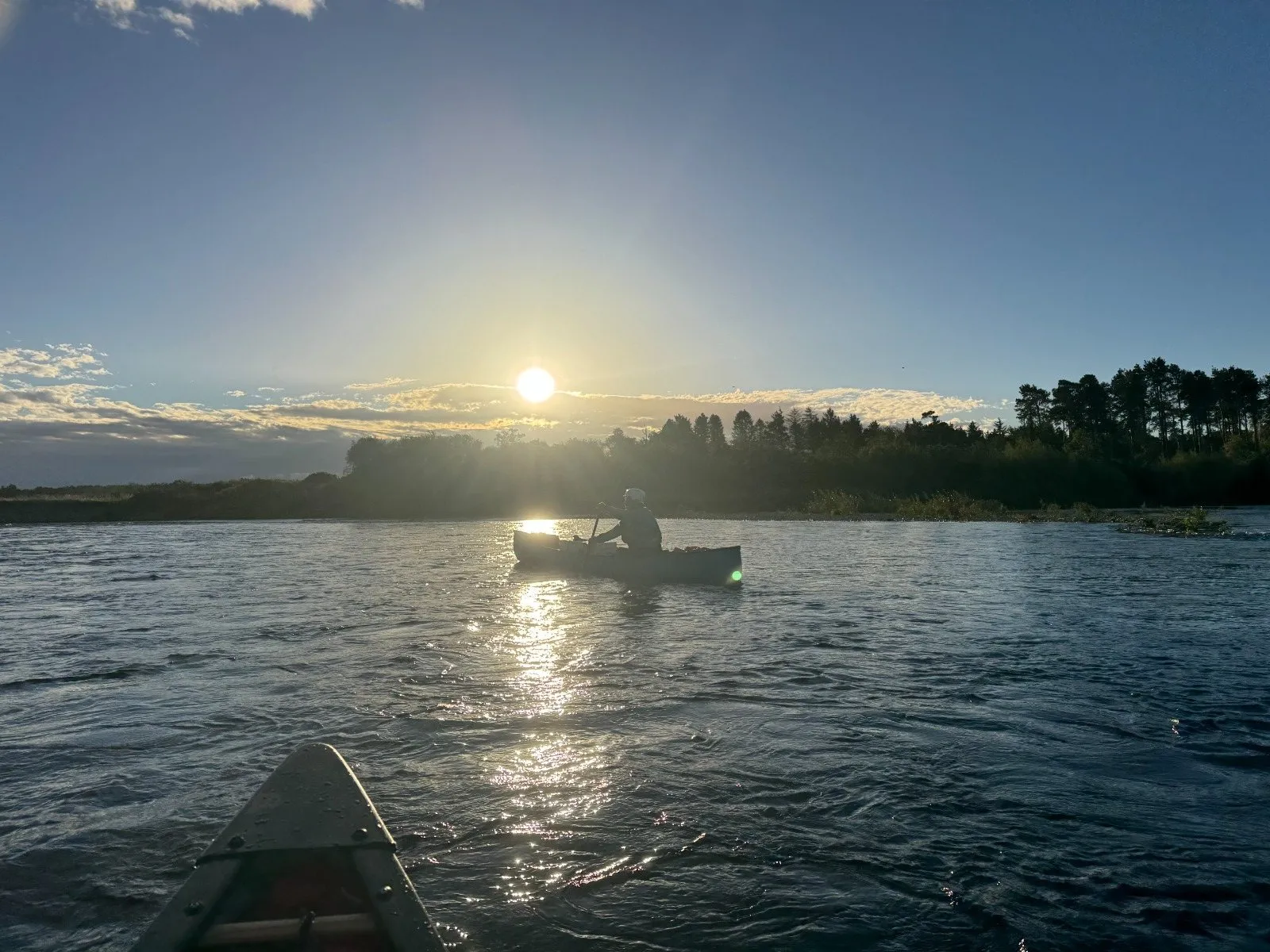
The WildAtlantic
A journey into the heart of Scotland’s wild islands. One man. One canoe. One month exploring the Outer Hebrides.
- Dates
- 1–31 May 2027
- Start
- Port Stoth, Butt of Lewis
- Finish
- Castlebay, Barra
A solo journey through Scotland’s Outer Hebrides.
In May 2027, British adventurer and expedition leader Joe Alexander will set out on a solo journey from the Butt of Lewis to Barra, travelling through some of Scotland’s most spectacular coastal wilderness.
With a 16 ft open canoe, a paddle, a small sail and everything needed to live independently, Joe will spend the month exploring the islands, wild camping along the coastline and discovering the remarkable wildlife, communities, traditions and local food that make the Outer Hebrides so special.
This isn’t a race or a record attempt.
It’s a journey of discovery.
Some of the world’s greatest adventures are closer than we think.
Joe has spent decades exploring some of the world’s wildest places. From the Himalayas to the rivers of Mongolia and Patagonia, his adventures have taken him across all seven continents.
Yet after all those journeys, one place continues to draw him back. Scotland. Its mountains, islands, dramatic coastlines, extraordinary wildlife and welcoming communities have made it one of his favourite places in the world.
The freedom of travelling through wild landscapes. The excitement of encountering wildlife in its natural environment. The opportunity to meet people whose lives are shaped by the places they call home. And the simple pleasure of discovering somewhere new.
Instead of travelling with a group, he’ll be alone.
Instead of a remote international river, he’ll be exploring the Atlantic islands of his own country.
And instead of rushing towards a destination, he’ll take the time to discover everything in between.
Because Beyond the Summit isn’t just about reaching extraordinary places. It’s about understanding what makes them extraordinary.
From the Butt of Lewis to Barra.
The Wild Atlantic begins at Port Stoth, close to the Butt of Lewis Lighthouse, at the northern tip of the Outer Hebrides, and travels south through the island chain to Castlebay on Barra.
Travelling in a 16 ft Hou open canoe, Joe will paddle and use a small canoe sail when conditions allow. He’ll carry his own camping equipment, food, clothing, navigation systems and safety equipment. There will be no vehicle following the expedition. Where necessary, a canoe trolley will carry the canoe across short sections of land.
The journey is planned to last up to 31 days, allowing time for exploration, wildlife encounters, community visits and periods of unsuitable weather. The route and crossings remain subject to detailed marine planning, weather, tides and safety assessments.
Expedition facts
- Expedition
- The Wild Atlantic
- Expedition leader
- Joe Alexander
- Location
- Outer Hebrides, Scotland
- Dates
- 1–31 May 2027
- Duration
- Up to 31 days
- Start
- Port Stoth, Butt of Lewis
- Finish
- Castlebay, Barra
- Craft
- 16 ft Hou open canoe
- Travel
- Solo paddling and canoe sailing
- Accommodation
- Wild camping
- Support
- Self-supported, with emergency shore-contact arrangements
- Portages
- Canoe trolley
- Final night
- Hotel in Castlebay
- Return
- Ferry from Castlebay to Oban
Eight islands. One journey.
The proposed journey follows the Outer Hebrides from north to south.
-
Lewis
The beginningStarting at Port Stoth, beneath the Butt of Lewis Lighthouse, the expedition begins on one of Scotland’s most dramatic coastlines.
-
Harris
Mountains and Atlantic coastA landscape of mountains, sheltered sea lochs, remote communities and extraordinary coastal scenery.
-
Berneray
Island lifeA chance to explore a smaller island community, its coastline and connections to the surrounding sea.
-
North Uist
Wildlife and waterA landscape of lochs, coastal habitats, crofting communities and abundant birdlife.
-
Benbecula
Connecting the islandsA central point in the island chain, providing opportunities for resupply and exploring local communities.
-
South Uist
The long islandRemote coastlines, crofting landscapes, wildlife and the traditions of the southern islands.
-
Eriskay
History and island characterA small island with a distinctive identity, strong maritime connections and a rich local story.
-
Barra
The final landingThe final stage, ending in Castlebay. After weeks of camping and travelling by canoe, Joe plans to spend his final night in a local hotel, enjoying a meal before taking the ferry to Oban.
Proposed route only, not a navigational track. The exact route, landing points and any overland portages will be set through detailed planning and on the day’s conditions.
Discovering Scotland’s wild Atlantic.
The Outer Hebrides are home to some of Britain’s most remarkable wildlife, and travelling quietly by canoe offers a different perspective on it.
Joe hopes to encounter white-tailed sea eagles soaring above the coast, otters searching for food among rocky shorelines and seals resting along remote beaches. The waters around the islands also offer the possibility of dolphins, porpoises and whales. With luck, there may even be a basking shark, although sightings are seasonal and never guaranteed.
Wildlife to look out for
Every animal will be observed responsibly, without disturbing feeding, breeding or resting behaviour.
No staged wildlife encounters.
No guarantees.
Just the natural world as it happens.
Life on the edge of the Atlantic.
The Outer Hebrides are home to communities with deep connections to the sea, the land and their traditions. Along the journey, Joe hopes to spend time with the people who live and work there.
Fishermen heading out to sea.
Crofters managing the land.
Craftspeople continuing traditional skills.
Small business owners building livelihoods in remote communities.
Families whose connections to the islands stretch back generations.
Through informal conversations and shared experiences, Joe hopes to discover what island life is really like: the rewards of living in such beautiful surroundings, the challenges of transport, weather, housing and employment, and the importance of community.
The aim is not simply to visit the islands, but to listen to the people who know them best. Every coastline has a story, and the people who live there are part of it.
A taste of the Hebrides.
The islands are surrounded by productive Atlantic waters and have a rich food culture shaped by fishing, crofting and local traditions.
Joe hopes to discover it by meeting local producers, visiting small cafés and restaurants and sharing meals with islanders along the route. From freshly landed fish, crab, lobster, scallops and langoustines to local lamb, baked goods and traditional island dishes.
Some meals will be cooked beside the canoe at a remote wild camp. Others may be enjoyed in a harbour café, a village restaurant or with people met along the way.
A hot coffee after a cold morning on the water.
Fresh bread after several days of camping.
A warm meal while waiting for the weather to improve.
It’s not just about what we eat. It’s about where it comes from and the people who produce it.
Living simply, travelling slowly.
For most of May, Joe’s home will be a tent carried in his canoe.
Camping equipment, food, water, clothing, navigation systems and emergency supplies will all be packed into waterproof bags and secured inside the canoe. Each day will begin with the weather and tides. Some days may offer long periods of paddling or sailing. Others may involve only a short journey to a sheltered bay. And occasionally the best decision will be to stay ashore.
Quiet mornings beside the sea.
Evenings watching the light change across the mountains.
The freedom of waking without knowing exactly where the next night will be spent.
All camping will follow the Scottish Outdoor Access Code, respecting wildlife, local communities and sensitive habitats. The expedition isn’t about surviving on the bare minimum. It’s about discovering how rewarding a simpler way of travelling can be.
Working with the Atlantic, not against it.
Atlantic weather can change quickly. Strong winds, swell, tidal streams and exposed headlands require careful judgement, and travelling solo in an open canoe means every decision matters.
When to launch. Which route to take.
Where to land. When to stop.
And when to accept that the conditions aren’t suitable.
The expedition will carry appropriate marine safety equipment, communications and emergency procedures, and the route, crossings and canoe set-up will be assessed and tested before departure. The aim is not to overcome the sea. Sometimes the best adventure decision is to wait.
The Wild Atlantic, a Beyond the Summit film.
Built around genuine encounters and personal reflections, the story will develop naturally as the expedition unfolds.
Returning to Scotland
Why someone who has explored the world keeps returning to Scotland, and the beginning of the journey at the Butt of Lewis.
The wild islands
The extraordinary landscapes, wildlife and natural environment of the Outer Hebrides.
The people of the Atlantic
Meeting island communities, learning about their traditions and understanding the realities of life in remote places.
Food from land and sea
Discovering local food, meeting producers and sharing meals with people along the journey.
The journey south
The challenges of travelling alone, working with the weather, wild camping and experiencing the freedom of the expedition.
The final landing
The arrival in Castlebay, reflections on the journey and the ferry home.
Join Joe on The Wild Atlantic.
Throughout May 2027, Joe plans to share updates from the Outer Hebrides whenever conditions and communications allow.
Updates depend on weather, signal and safety. To protect Joe and the wildlife, they won’t include live locations or exact camp spots.
Supporting The Wild Atlantic.
The Wild Atlantic offers opportunities for organisations and brands that share an interest in exploration, outdoor equipment, wildlife, conservation, Scottish communities and responsible travel.
Supporters may be acknowledged through expedition updates, documentary credits, website content and storytelling. Every partnership is chosen to suit the expedition’s independent character.
Joe’s expedition partners





Adventurer. Expedition leader. Explorer.
Joe Alexander is a British adventurer and expedition leader who has spent decades exploring some of the world’s most extraordinary places, across all seven continents and more than 75% of the world’s countries.
As the founder of Alexander Adventures, he has led expeditions for individuals, families, schools and organisations around the world. His experience spans mountaineering, open canoeing, sea kayaking, white-water expeditions, scuba diving, mountain biking and remote-area travel.
Despite exploring some of the most remote places on Earth, Scotland remains one of his favourite destinations. In May 2027, he’ll return to discover it from the water.
Adventure isn’t always about going further.
The Wild Atlantic isn’t a race.
It isn’t a record attempt.
And it isn’t about conquering a coastline.
It’s about curiosity, wildlife and wild places, meeting people and sharing stories, and remembering that some of the greatest adventures are closer to home than we think.
A five-year programme of expeditions.
Every project is proposed and subject to planning, safety assessment and funding.
- 2028
Everest and Lhotse
The flagship project: Everest (8,849 m) and Lhotse (8,516 m) back to back, then down from Lukla by mountain bike and on to the Sun Kosi by white-water kayak.
Proposed - 2028
Kilimanjaro Beyond 24
A proposed 24-hour mountain challenge, subject to route, acclimatisation and operational assessment.
Proposed - 2029
Darién Wilderness
A possible remote wilderness project, at concept stage only.
Proposed - 2029
Sicily 360
A sea kayak circumnavigation of Sicily.
Proposed - 2030
20 Countries, 30 Days
An international scuba-diving challenge.
Proposed - 2031
Madagascar Coast to Coast
A major wilderness journey across Madagascar, for the wildlife, landscapes and local communities.
Proposed